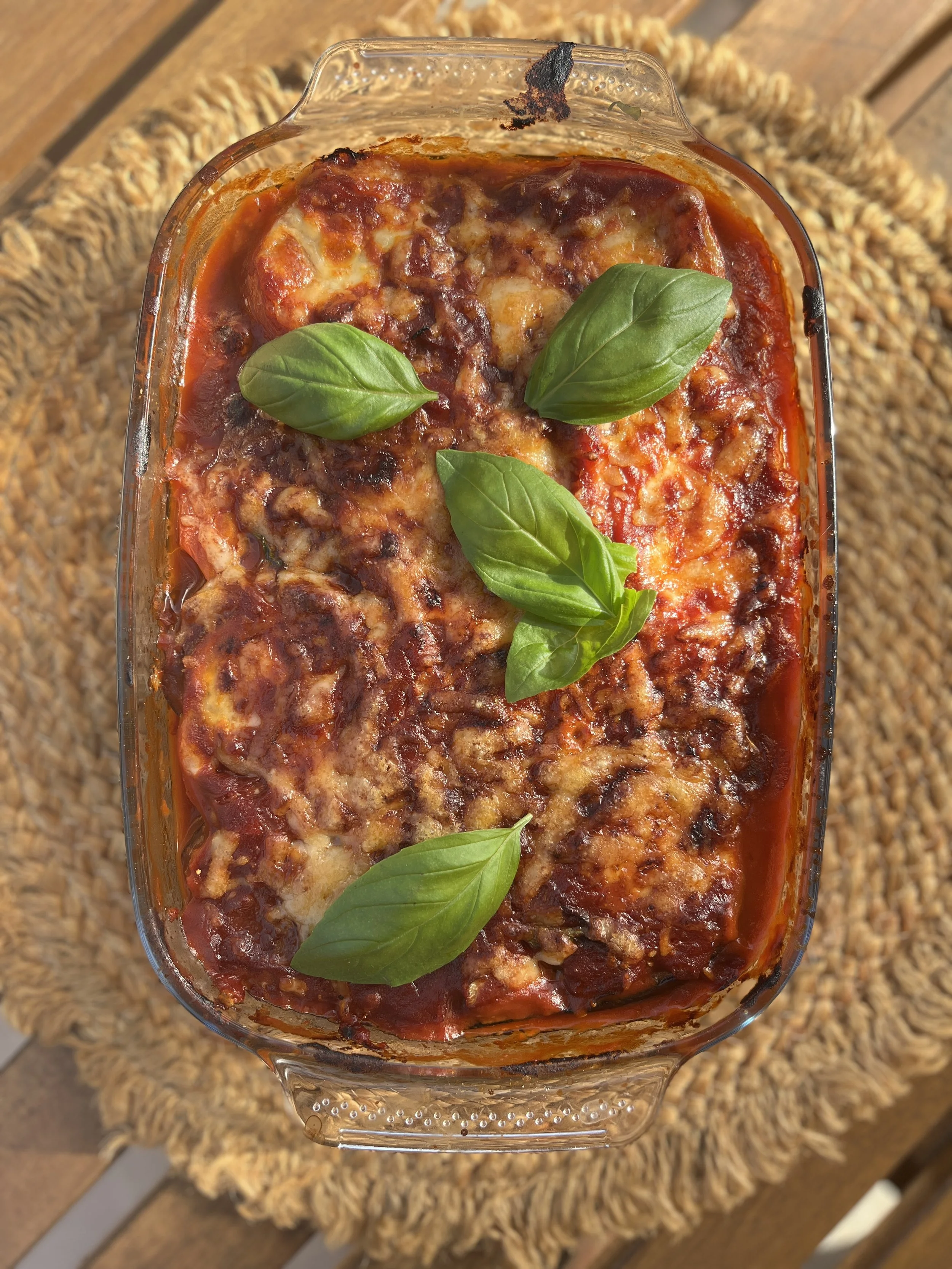
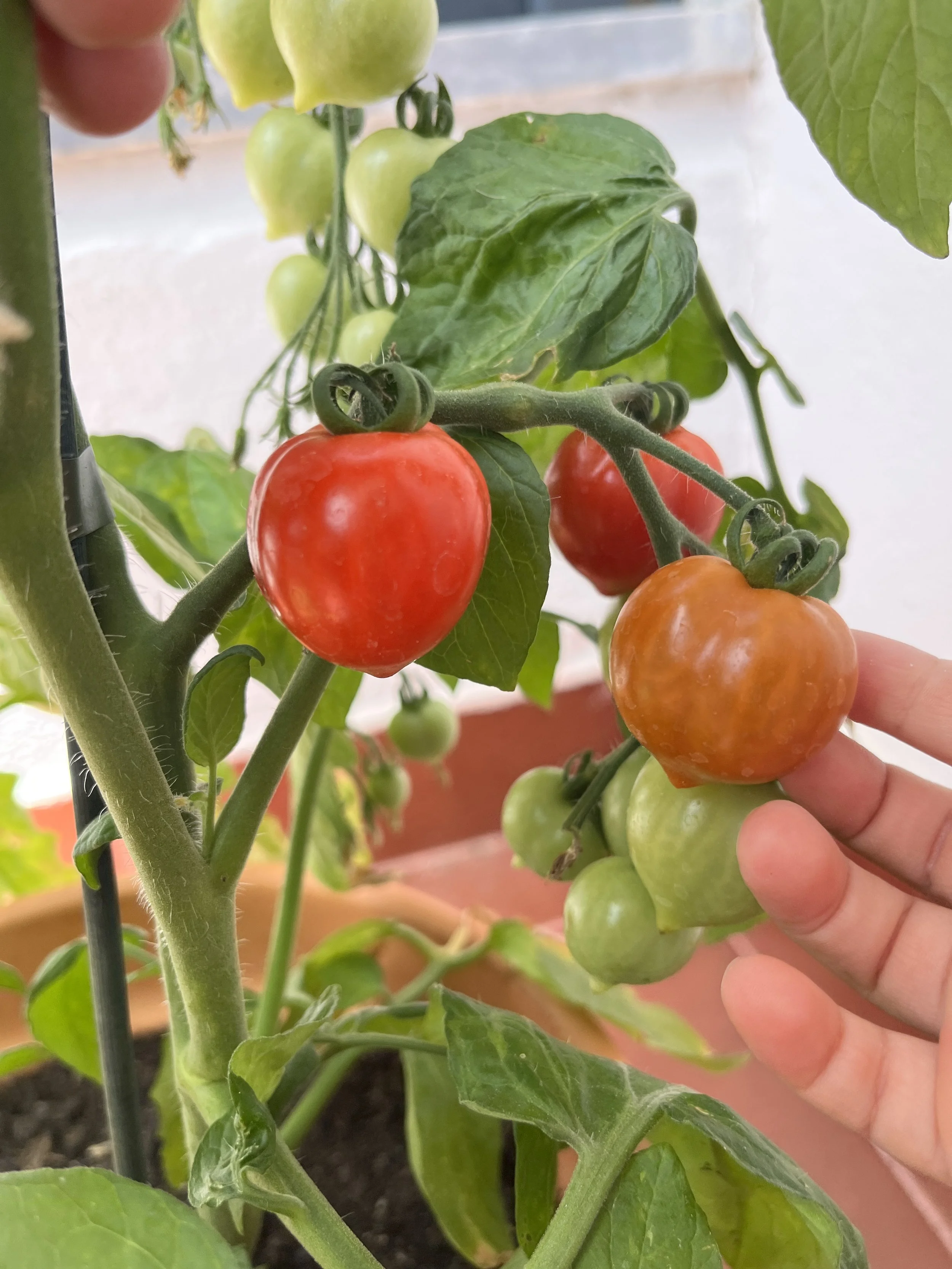
I made this dish with the tomatoes I grew myself, and honestly, it was one of those meals that just felt right. The kind you make when you want something that looks impressive, tastes incredible, and doesn’t actually require that much from you.
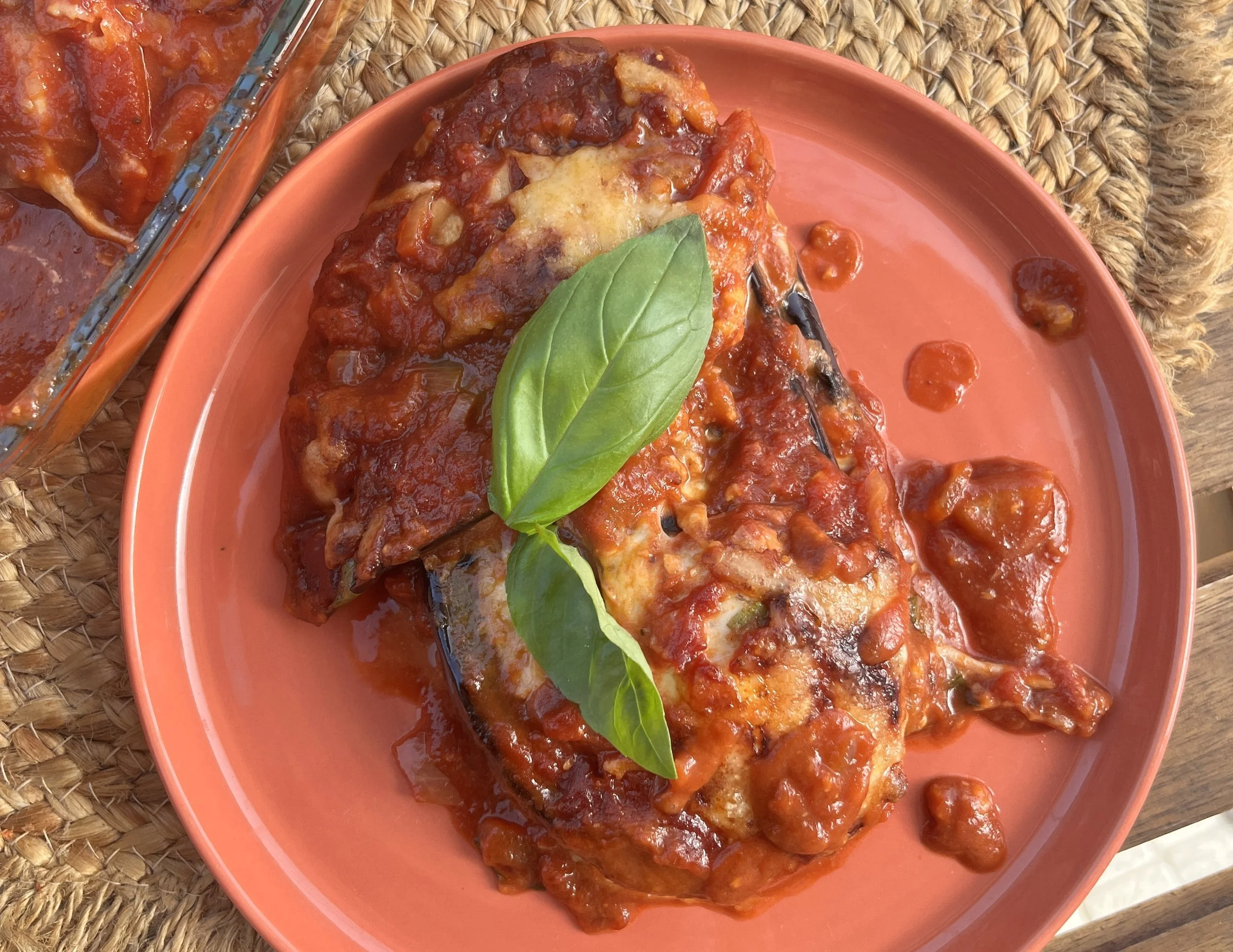
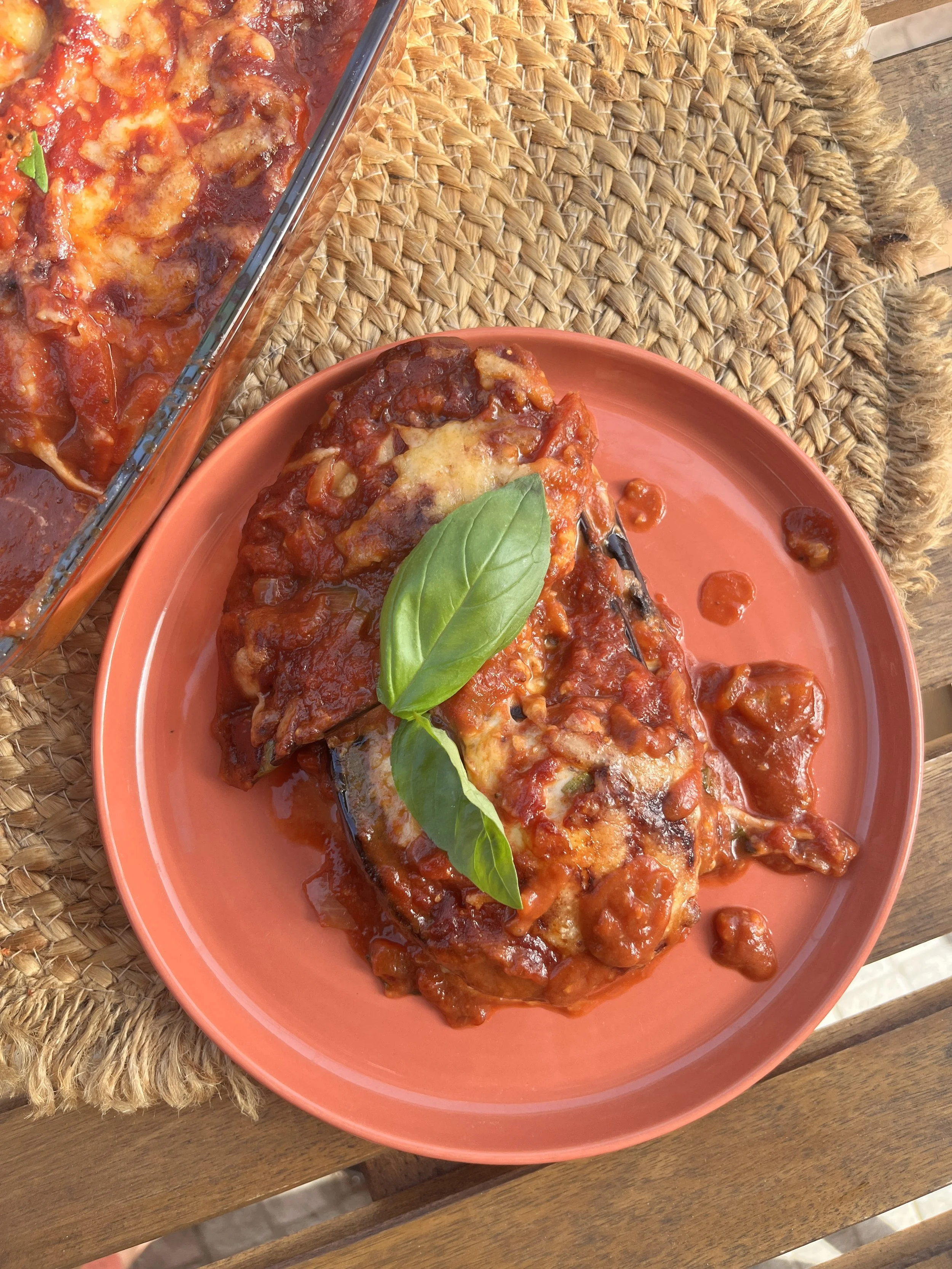
Melanzane alla Parmigiana is one of those dishes that doesn’t need much explaining. It’s Italian, it’s layered, it’s bubbling and golden and deeply satisfying in that I actually fed myself well tonight kind of way. Comfort food that doesn’t leave you feeling heavy or bloated afterwards.
And the best part? It’s genuinely nourishing, not just delicious. Below I’ll break down why, and how to make it even more of a complete meal depending on where you are in your cycle.
Why summer is the perfect time to make Melanzane alla Parmigiana
Both tomatoes and eggplant are summer vegetables, and in Portugal, June is exactly when they come into their own. The markets in Cascais right now are full of them. Deep purple aubergines, heavy in the hand. Tomatoes that actually smell like tomatoes. This is the moment.
Eating seasonally isn’t just a nice idea. When a vegetable is in season, it’s at its peak of nutritional value with more antioxidants, more flavour, more of exactly what your body needs. Out-of-season tomatoes, grown in a greenhouse and shipped from somewhere far away, are a completely different thing to a July tomato that ripened under the, in my case, Portuguese sun.
If you have a garden or even a pot on a terrace, grow tomatoes. They’re forgiving, they’re abundant, and there is genuinely nothing better.
Melanzane alla Parmigiana ingredients (4–6 servings)
For the eggplant:
3 large eggplants (aubergines)
Extra virgin olive oil
Sea salt
For the tomato sauce:
700 ml tomato passata (or 5–6 fresh ripe tomatoes, blended)
2 garlic cloves, minced
1 small onion, finely chopped
Fresh basil, a generous handful
Olive oil, salt, black pepper
For layering:
250 g mozzarella, sliced or torn
80 g Parmesan, grated
2–3 ripe tomatoes, sliced
More fresh basil
How to make it
1. Prepare the eggplant
Slice the eggplants lengthwise about half a centimetre thick. Sprinkle lightly with salt and let them sit for 30 minutes. This pulls out excess moisture and any bitterness. Pat them dry, brush with olive oil, and roast at 200°C for 20–25 minutes, turning halfway. You want them soft and starting to go golden at the edges. Not mush, but not raw. They’ll continue cooking in the oven later so don’t overthink it.
2. Make the tomato sauce
While the eggplant is roasting this is where I usually pour myself something and pretend I’m a little Italian grandmother. Warm a tablespoon of olive oil, soften the onion, add the garlic, let it cook for another minute. Add the passata, salt, pepper, and a big handful of basil leaves. Simmer gently for 20–30 minutes. Don’t rush this part. A slow sauce is a good sauce.
Using fresh tomatoes instead of passata: roughly chop them and cook them down a little longer, about 35–40 minutes, until they break down into a thick sauce. The flavour will be even better.
3. Layer everything up
In a baking dish, start with a thin layer of tomato sauce on the bottom. Then eggplant. Then a layer of fresh tomato slices. Then mozzarella. Then Parmesan. Then a few basil leaves. Then do it all again.
Repeat until you’ve used everything up, and finish with a generous layer of sauce and Parmesan on top. Don’t hold back on the Parmesan here, that golden crust is exactly what you’re after.
4. Bake
180°C for 35–40 minutes, until it’s bubbling and golden on top and your kitchen smells incredible.
5. Let it rest seriously
At least 15–20 minutes before you cut into it. I know it’s hard. But the layers need to settle, otherwise it falls apart on the plate and you lose everything you worked for. This dish is also genuinely better the next day. Make it ahead if you can.
Is Melanzane alla Parmigiana actually hormone-friendly?
Yes. It’s not a superfood, but here’s what’s actually in this dish and why it matters for hormone health:
Eggplant is high in fibre and antioxidants, particularly nasunin, which is found in the skin. Fibre feeds the gut bacteria that help your body metabolise and eliminate excess oestrogen. If you deal with PMS, breast tenderness, or mood swings before your period, gut health and oestrogen clearance are worth paying attention to.
Tomatoes, especially when cooked, are rich in lycopene. Lycopene becomes more bioavailable with heat and fat (hello, olive oil), and it supports liver function. Your liver is how your body processes and detoxifies old hormones. When the liver is overwhelmed, which it often is when we’re stressed, under-sleeping, or eating processed food, hormones don’t get cleared efficiently. Supporting it through food is one of the gentlest things you can do.
Mozzarella and Parmesan add protein and fat, which help keep blood sugar more stable than a pasta-based meal would. Blood sugar stability is hormone balance, spikes and crashes drive cortisol up, which disrupts progesterone, which affects your whole cycle.
Olive oil provides the healthy fats that are essential for hormone production. I’ll say it every time: fat is not the enemy. Your hormones are literally made from it.
Where this dish can fall a little short on its own is protein. If you’re eating it as a complete meal, I’d add something alongside:
Grilled chicken or fish
A salad with chickpeas, white beans, or lentils
Or cook lentils and tuck a layer between the eggplant, it just makes it more filling and more nourishing
A note on tomatoes and inflammation
Tomatoes are nightshades, which means some women don’t tolerate them well, especially if there’s underlying inflammation, gut issues, or conditions like endometriosis or arthritis. If you notice bloating, joint stiffness, or your skin flaring after eating them, it’s worth paying attention to that signal.
In that case, swap the passata for a roasted red pepper sauce. Roast 3–4 red peppers whole at 200°C until the skin is charred and blistered, about 30–35 minutes. Peel, remove the seeds, and blend with a garlic clove, olive oil, and a little salt. Cook it down in a pan for 10 minutes to deepen the flavour. It’s naturally sweet, slightly smoky, and works as a perfect 1:1 swap in this recipe.
For most women though, cooked tomatoes, especially in season, in summer, are genuinely supportive. As with everything in hormone health: listen to your body first.
When to eat this in your menstrual cycle
Follicular and ovulatory phase: this is a lovely, light Mediterranean dish just as it is. Your digestion tends to be stronger, your energy is higher, and your body is efficient at using what you give it.
Luteal phase (the two weeks before your period): this is when your body needs more, more calories, more protein, more magnesium, more warmth. Make the lentil version. Pair it with roasted vegetables or a simple bean salad on the side. This is the phase where skimping on food tends to catch up with us as cravings, low mood, or that bone-deep tiredness that arrives a few days before bleeding begins. Feed yourself properly in the luteal phase and you’ll notice the difference.
Menstrual phase: warm, easy to digest, and comforting, this dish works well here too, especially in the first days of your period when you want something that doesn’t take much effort but still feels deeply nourishing.
Serve it with
A simple green salad
Crusty sourdough
Grilled fish or chicken if you want more protein on the plate