Belly-Soothing Lentil Stew with Bone Broth (for postpartum & luteal phase
A comforting, nourishing, easy-to-digest stew for tender days..
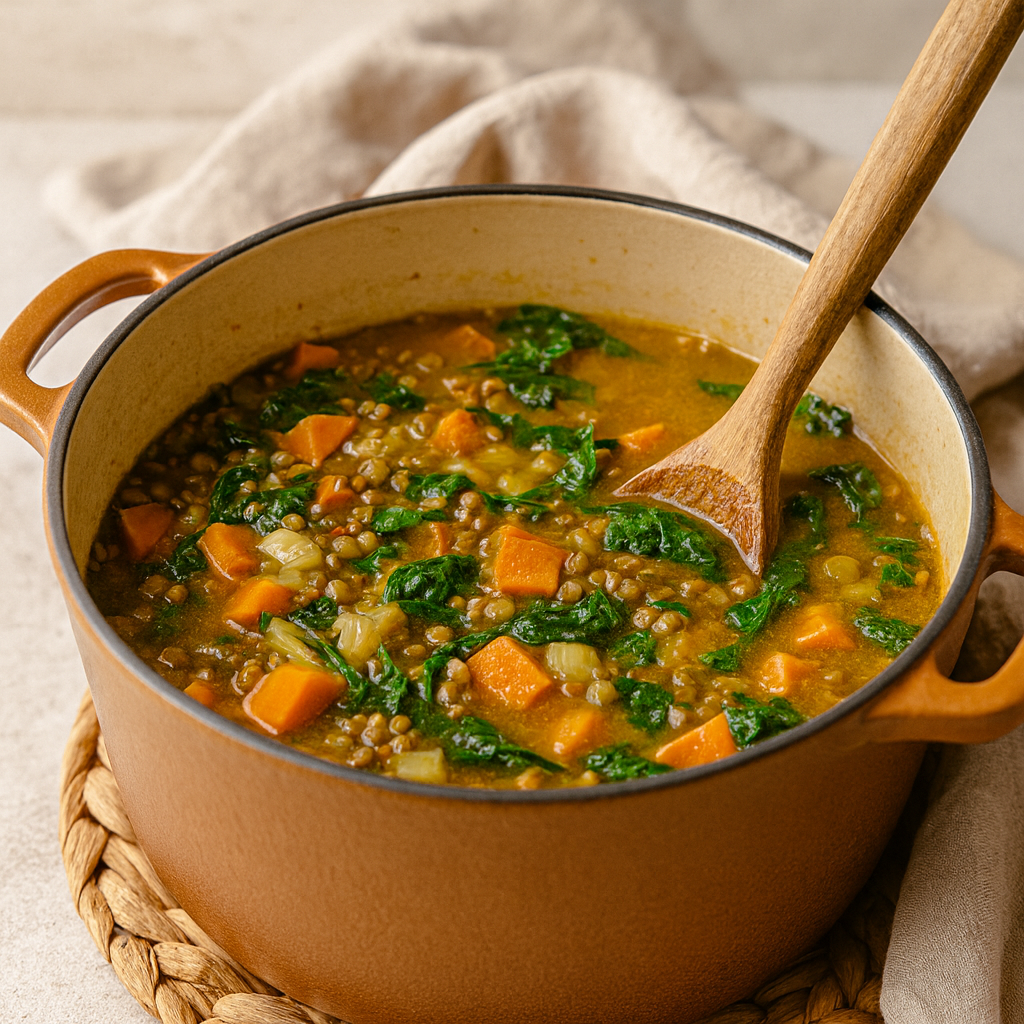
This Belly-Soothing Lentil Stew is a warm, grounding bowl made with chicken bone broth, sweet potato, spinach, and soft spices.
It’s gentle on digestion, full of minerals, and deeply comforting — perfect for days when you feel more sensitive, tired, bloated, or in need of something simple and nurturing.
The combination of slow-cooked lentils + sweet potato + warm broth gives this stew its soothing, calming effect.
It’s ideal for:
the luteal phase (pre-menstrual days)
postpartum (especially the first week after birth)
stressful, cold, or emotional days
easy meal prep or freezer cooking
Made with homemade chicken bone broth, this stew supports digestion, blood sugar, mineral levels, warmth, and recovery, without feeling heavy or overwhelming.
Why You’ll Love This Stew
Easy on digestion
Warm, soft, grounding texture
Full of minerals (magnesium, potassium, iron)
Supports stable energy and blood sugar
Uses bone broth for deeper nourishment
Freezer-friendly
Delicious for lunch the next day
How This Stew Supports Your Body
This lentil stew is designed to work with your body during phases when digestion slows and nourishment needs increase.
Lentils provide gentle plant protein and fibre that help stabilise blood sugar and prevent energy dips , especially helpful in the days before menstruation and after birth.
Sweet potato offers slow-release carbohydrates and beta-carotene, supporting hormone balance, steady energy, and emotional calm.
Spinach adds magnesium, potassium, and folate in a warm, easy-to-digest form.
Chicken bone broth delivers collagen, minerals, and amino acids that support gut health, tissue repair, hydration, and recovery, making this stew especially valuable in postpartum.
Together, these ingredients create a meal that feels grounding without heaviness, nourishing without stimulation.
When to Eat This Stew
This recipe is especially supportive when you are:
in your luteal phase (the days before your period)
in early postpartum, when warmth and softness matter most
experiencing bloating, cravings, or fatigue
needing blood sugar stability
preparing meals ahead of time for busy or tender days
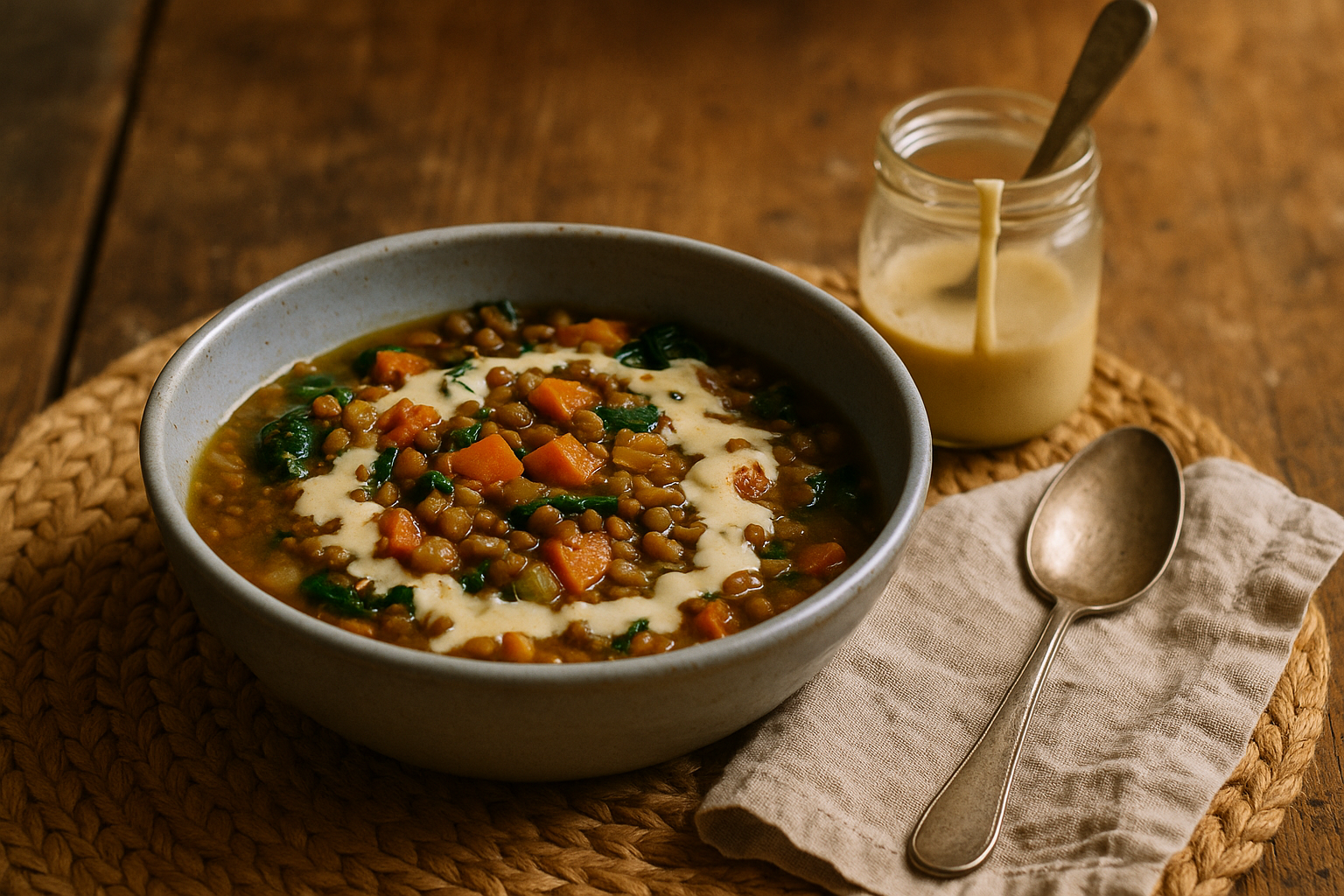
Belly-Soothing Lentil Stew Recipe
Rooted in Ayurvedic traditions, this warm drink isn’t only delicious but also heals postspartum
Prep time: 5 mins
Cook time: 30-40 mins
Total time: 45 mins
Servings: 4
Serves 4 • Freezer-friendly • Gentle on digestion
Ingredients
1 cup green or brown lentils, rinsed
1 medium sweet potato (or pumpkin), diced
1 onion, chopped
2 garlic cloves, minced
1 large carrot, sliced
1 tsp smoked paprika
½ tsp cumin
½ tsp turmeric (optional)
4 cups chicken bone broth
1 handful spinach
Olive oil
Sea salt & black pepper
1–2 tbsp lemon juice
Optional to serve: tahini, Greek yogurt, or cooked rice
Method
Heat olive oil in a pot and gently sauté onion, garlic, and carrot until soft.
Add smoked paprika, cumin, and turmeric and cook briefly until fragrant.
Stir in lentils, sweet potato, and bone broth.
Bring to a boil, then reduce heat and simmer for 25–30 minutes, until tender.
Add spinach and let it wilt.
Finish with lemon juice, salt, and pepper. Serve warm.
Simple Variations
For the luteal phase
Add extra broth for hydration and warmth
Serve with rice if hunger is higher
Add tahini for healthy fats and calcium
For postpartum
Freeze in small portions ahead of birth
Reheat gently on the stove
Add a spoon of olive oil for nervous system support
Eat slowly and calmly, digestion benefits from softness