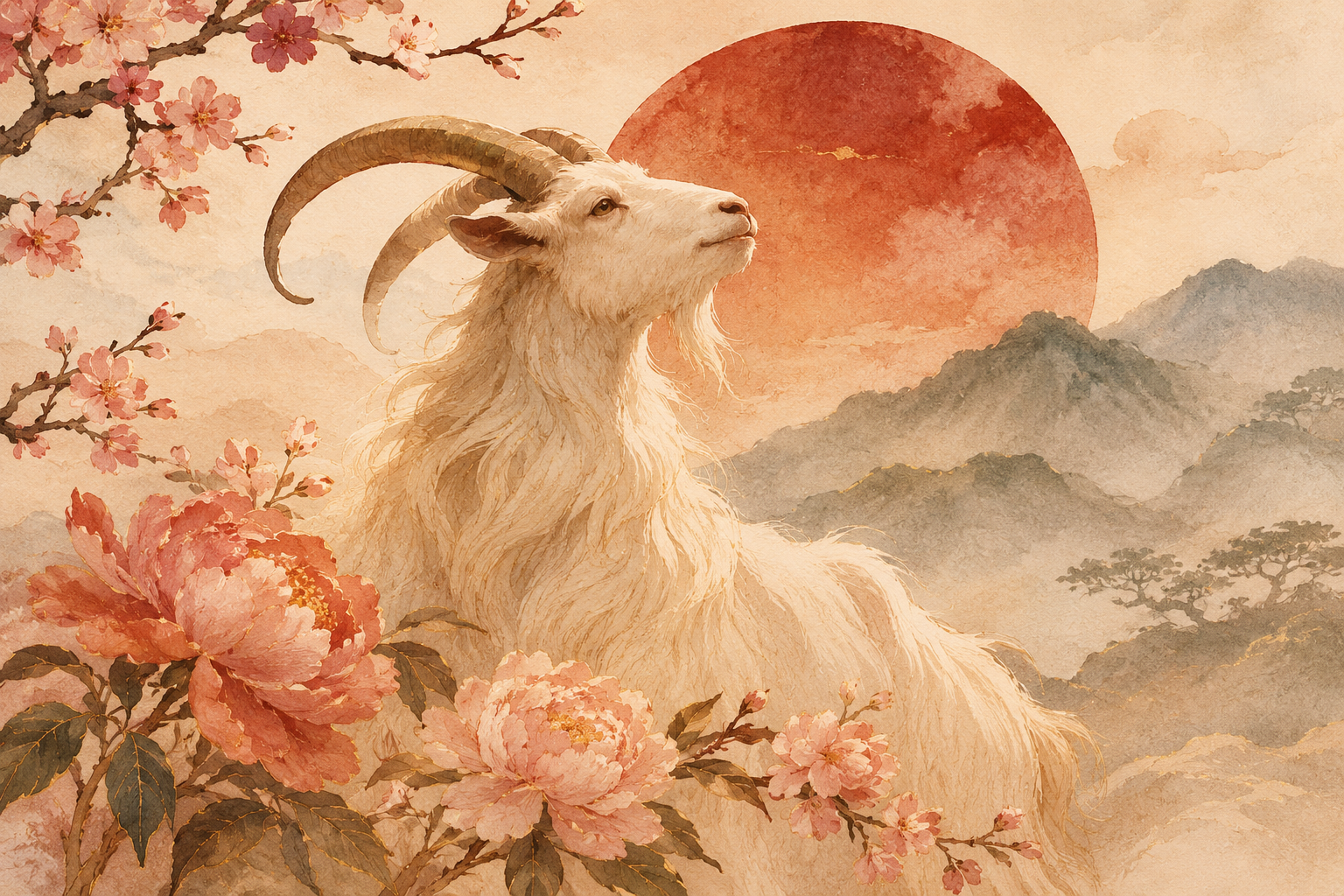
As we move from the powerful Fire Horse into the gentler energy of the Yin Fire Goat, what can ancient Chinese wisdom teach us about balance, nourishment, and the rhythms of life?
As 2026 draws to a close, we are preparing to welcome a new chapter in the Chinese zodiac: the Year of the Yin Fire Goat. After a year traditionally associated with the bold, passionate energy of the Fire Horse, 2027 introduces a rather different symbolism.
One of gentleness, creativity, compassion, and quiet strength.
In a world that constantly encourages us to do more, achieve more, and move faster, I find this transition particularly interesting. Not because the stars can predict what lies ahead, but because ancient traditions can offer us a different perspective on how we live.
Chinese philosophy has always fascinated me for its close relationship with nature. Its understanding of balance, transformation, and the changing seasons feels especially relevant to women's health, where our bodies are continually moving through their own rhythms and transitions.
So what exactly does the Year of the Fire Goat mean, and what might its symbolism inspire us to bring into our lives in 2027?
The Meaning of the Fire Goat in Chinese Astrology
The Chinese zodiac, known as Shēngxiào (生肖), follows a repeating cycle of twelve animals. But beyond the familiar animal signs lies a more intricate system combining the Five Elements with Yin and Yang. Together, these create a 60-year cycle in which each year carries its own symbolic combination.
The Chinese Lunar New Year begins on 6 February 2027, welcoming the year of Dīng Wèi (丁未), the Yin Fire Goat. In some traditional astrological systems, the year begins slightly earlier, with Lìchūn, the Beginning of Spring, on 4 February.
The Goat, or Yáng (羊), is the eighth animal of the Chinese zodiac. Traditionally associated with kindness, harmony, sensitivity, and artistic expression, it represents a gentler kind of strength. Unlike the independent and restless Horse, the Goat is often portrayed as more attentive to its surroundings, relationships, and sense of belonging.
Yet there is more to the Fire Goat than its animal sign. In Chinese cosmology, the Five Elements — Wood, Fire, Earth, Metal, and Water — describe different qualities and processes found in nature. The Goat is associated with Earth, while 2027 carries the element of Yin Fire.
In the traditional generating cycle of the Five Elements, Fire nourishes Earth. Symbolically, this relationship connects warmth and inspiration with stability and nourishment. It creates a beautiful image of energy being directed towards something meaningful and lasting, rather than simply expanding outward.
The last Yin Fire Goat year was 1967, and the next will be 2087.
From the Fire Horse to the Fire Goat: A Different Kind of Energy
What makes the transition from 2026 to 2027 particularly interesting is that both years belong to the Fire element, yet express it in very different ways.
The Yang Fire Horse of 2026 is traditionally associated with the image of the sun: bright, powerful, expansive, and full of movement. Combined with the Horse's symbolism of freedom and independence, it represents an outward-looking energy, driven by action, ambition, and exploration.
Yin Fire, on the other hand, is often compared to the flame of a candle. It still offers warmth and light, but in a softer, more focused way. Combined with the Goat's association with compassion, creativity, and harmony, it suggests a more nurturing expression of the same element.
Rather than interpreting this as a prediction that 2027 will be a calmer year, I prefer to see it as an invitation to reflect on our relationship with ambition and achievement. We live in a culture that often celebrates constant productivity, yet rarely asks what it takes to sustain that pace.
Perhaps the image of the Yin Fire Goat can remind us that progress doesn't always require more intensity. Sometimes, it asks for greater attention to what supports us along the way.
We don't necessarily have to slow down our ambitions. We can change how we nourish ourselves while pursuing them.
Yin and Yang: The Wisdom of Living in Balance
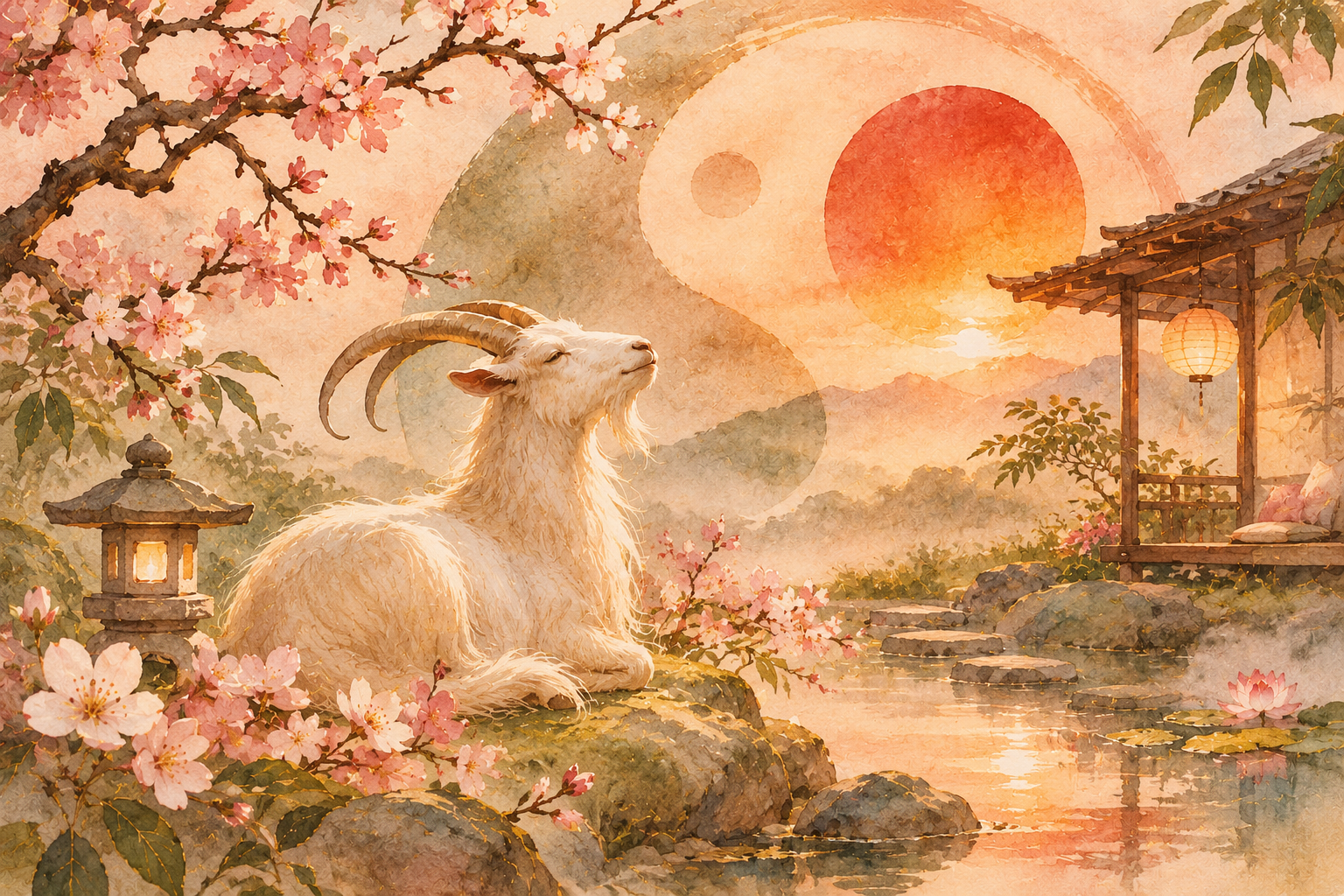
At the heart of Chinese philosophy lies the concept of Yin and Yang (陰陽), two complementary qualities that describe the constantly changing relationship between opposing forces in nature.
Yin is traditionally associated with darkness, coolness, stillness, and inward movement, while Yang represents light, warmth, activity, and outward expression. Yet neither exists independently of the other. Just as day gives way to night and winter eventually turns into spring, Yin and Yang are understood as part of a continuous process of transformation.
This is also reflected in the familiar Yin Yang symbol, where each half contains a small part of the other. It reminds us that stillness holds the potential for movement, just as periods of activity eventually call for recovery.
What I love about this philosophy is that it doesn't suggest we should always be calm, rested, or perfectly balanced. Instead, it acknowledges that life naturally moves between different states, each with its own purpose.
And perhaps this is where the symbolism of the Yin Fire Goat becomes especially meaningful for women.
Our Inner Seasons: What This Philosophy Can Teach Us About Women's Health
As women, our bodies move through their own changing rhythms. Throughout the menstrual cycle, fluctuations in oestrogen and progesterone influence reproductive processes and can affect sleep, appetite, mood, and energy. Pregnancy, postpartum recovery, and the transition towards menopause bring further physiological changes, each requiring different forms of care and support.
In Traditional Chinese Medicine, these transitions are understood through concepts such as Yin, Yang, Qi, and Blood. Although these belong to a traditional medical framework and cannot be directly equated with modern physiology, they offer an interesting perspective on the importance of observing patterns and responding to changing needs.
During menstruation, for example, some women experience fatigue and feel a greater need for rest. Others notice renewed energy as they move into the follicular phase, while the days before menstruation may bring changes in appetite, sleep, or emotional sensitivity. These experiences vary enormously, and there is no scientific basis for expecting every woman to follow the same pattern of energy or productivity.
What science does support is the value of understanding our individual menstrual patterns. Tracking cycle length, symptoms, and changes over time can provide useful insights into reproductive health and help identify when further medical evaluation may be needed.
For me, this is where ancient philosophy and modern health awareness can meet. Not because Chinese astrology influences our hormones — there is no scientific evidence that it does — but because the idea of living with greater awareness of our rhythms encourages us to pay attention.
Rather than expecting ourselves to feel and perform exactly the same every day, we can become curious about what our bodies are communicating. Sometimes that means adjusting our movement, paying closer attention to our meals, or making more space for recovery.
This is also central to my work as a women's health coach. Through my Cycle Reset Programme, I help women better understand their menstrual patterns and explore nutrition and lifestyle habits that support their individual wellbeing.
The Fire Goat and Motherhood: Remembering to Nourish Ourselves
The Goat's traditional association with family, compassion, and care feels particularly meaningful when I think about motherhood.
Becoming a mother has changed the way I understand nourishment. There is something beautiful about caring for another human being, but it also comes with a constant shift of attention away from ourselves. Between preparing meals, managing everyday responsibilities, working, and responding to our children's needs, it becomes surprisingly easy to forget that we need care, too.
I think many mothers recognise this feeling. We become incredibly attentive to whether our children have eaten enough, slept well, or need comfort, yet often overlook those same needs in ourselves.
The symbolism of Yin Fire offers a lovely image here. A candle can provide warmth and light, but it needs fuel to continue burning. In much the same way, our ability to care for others depends partly on how well we are supported ourselves.
This is particularly important during the postpartum period. Traditional Chinese postpartum practices have long emphasised rest, warmth, and nourishing food, while modern healthcare recognises the importance of adequate nutrition, physical recovery, emotional, wellbeing and practical support after childbirth.
Although traditional practices should always be considered alongside evidence-based medical guidance, I appreciate the underlying recognition that the mother deserves to be cared for, not simply expected to recover while caring for everyone else.
It's a philosophy that also inspires my Postpartum Nourishment offerings, where food becomes a practical and loving way of supporting women during this extraordinary transition.
And perhaps the message extends beyond motherhood. Whatever stage of life we're in, caring for ourselves should not be something we postpone until everything else is done.
Living With the Seasons: An Ancient Perspective on Everyday Nourishment
Another aspect of Chinese philosophy that I find especially beautiful is its close relationship with the natural world. In Traditional Chinese Medicine, the Five Elements are associated with seasonal transitions: Wood with spring, Fire with summer, Earth with late summer, Metal with autumn, and Water with winter.
The traditional Chinese calendar also recognises 24 solar terms, known as Jiéqì (節氣), which mark changes in the sun's position throughout the year. Historically important for agriculture, these seasonal markers continue to offer a fascinating way of observing nature's rhythms.
Rather than treating every month as an entirely separate chapter, this philosophy sees the year as a continuous cycle of growth, expansion, gathering, and restoration.
I find this perspective particularly inspiring when it comes to food and lifestyle. Winter naturally lends itself to comforting soups, stews, and warm meals, while spring brings fresh greens and herbs. Summer offers an abundance of colourful produce, and autumn invites us to enjoy seasonal vegetables and more grounding meals.
These aren't strict nutritional rules, nor does eating according to the seasons automatically balance our hormones. But choosing varied, nourishing foods, spending time outdoors, and adjusting our routines to our individual needs can support overall wellbeing.
More importantly, seasonal living encourages us to notice the world around us and recognise that change is a natural part of life.
Welcoming 2027: A Year of Living More in Rhythm
Every January, we're encouraged to set new goals, make resolutions, and become better versions of ourselves. We promise to exercise more, eat better, work harder, or finally achieve the things we've been putting off.
But as we approach the Year of the Yin Fire Goat, I wonder whether we could begin a little differently.
Instead of asking only what we want to achieve, perhaps we could also ask what we need, to feel well while working towards those goals.
For some women, that might mean understanding their menstrual cycle more deeply. For others, it may be creating more nourishing food routines, making space for rest, or finding better support during motherhood.
The symbolism of the Fire Goat doesn't offer a prediction of what the year ahead will bring. But it does offer a beautiful reminder that gentleness and strength can coexist, and that meaningful growth doesn't have to come at the expense of our wellbeing.
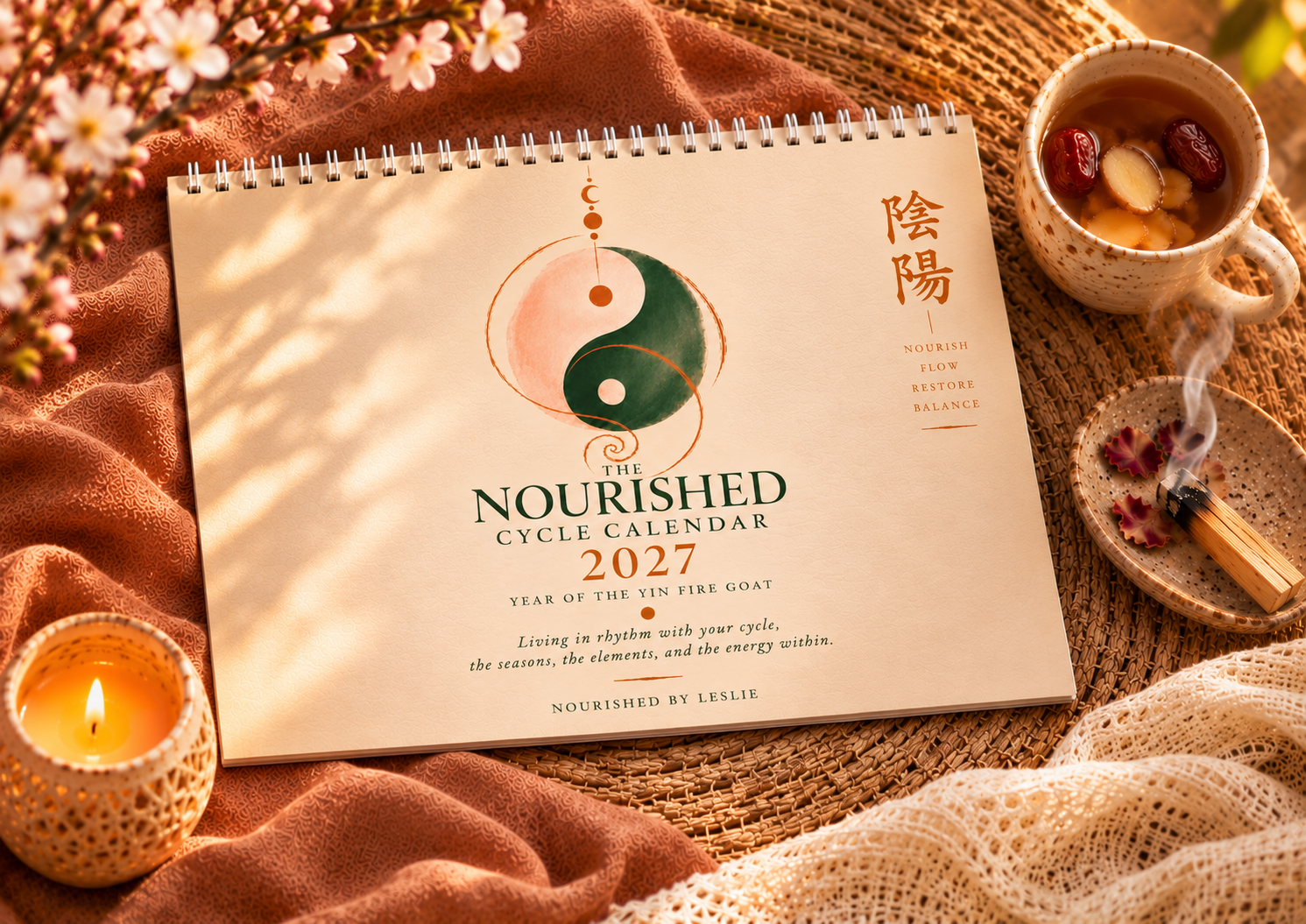
Living in rhythm with your cycle, the seasons, the elements, and the energy within.
Nourish · Flow · Restore · Balance
What if, instead of expecting yourself to feel and perform the same every day, you learned to live a little more in tune with your body's ever-changing needs?
Just like nature, we move through different seasons. Times of growth, energy, and connection, but also moments when our bodies ask us to slow down, turn inward, and restore.
The Nourished Cycle Calendar 2027 is an invitation to become more aware of these natural rhythms and discover how to nourish yourself throughout the year.
Inspired by Traditional Chinese Medicine (TCM), the wisdom of Yin & Yang, the Five Elements, and the changing seasons, this calendar brings together ancient philosophy and a modern approach to women's health.
In Chinese medicine, each season is associated with an element, different organ systems, and particular qualities of energy. Winter invites us to conserve and restore, spring encourages movement and growth, summer brings warmth and connection, while autumn reminds us to slow down and let go.
These seasonal transitions offer a beautiful perspective on how we can adapt our food, movement, rest, and everyday habits throughout the year.
And just as the seasons change around us, our inner world changes too. Our hormones fluctuate throughout the menstrual cycle, influencing our energy, mood, appetite, and needs.
This calendar helps you connect the two.
By tracking your cycle alongside the moon phases and seasonal changes, you can begin to recognise your own patterns, understand what your body may be asking for, and make more conscious choices about how you care for yourself.
Not another set of rules to follow, but a gentle reminder to listen, observe, and find your own balance.
Each month includes:
Seasonal Wisdom & the Five Elements: Discover the seasonal energies through the lens of Traditional Chinese Medicine, including Yin & Yang and the 24 Chinese solar terms.
Nourish: Seasonal foods, nutrients, and traditional food wisdom to inspire how you nourish your body throughout the year.
Move: Movement suggestions inspired by the season, encouraging you to balance activity with recovery.
Rituals & Cycle Support: Simple practices to support your wellbeing, from nourishing routines to moments of rest and reflection.
The Eight Moon Phases: Follow the lunar cycle and explore its symbolism as an invitation to set intentions, reflect, and reconnect with nature.
Cycle Tracking: Space to mark your menstrual days, possible ovulation, symptoms, mood, and personal observations, helping you recognise patterns over time.
A Digital User Guide: Accessible through a QR code, with deeper insights into TCM, Yin & Yang, the Five Elements, moon phases, and how to use your calendar.
All brought together in a beautifully illustrated, feminine, and timeless design, created to bring a little more awareness and intention into your everyday life.
2027, The Year of the Yin Fire Goat
In Chinese astrology, 2027 welcomes the Yin Fire Goat, traditionally associated with creativity, sensitivity, harmony, and gentle transformation.
A beautiful theme for a year dedicated to finding balance, respecting your own rhythm, and learning to nourish yourself through life's changing seasons.
Who is this calendar for?
For women who want to understand their menstrual cycle more deeply, feel more connected to nature, and discover a more mindful approach to hormonal health and everyday wellbeing.
Whether you're navigating your fertile years, motherhood, postpartum, perimenopause, or simply a new chapter in life, this calendar encourages you to honour the woman you are today and the changes you're moving through.
A thoughtful gift for yourself or a woman you love, offering inspiration, nourishment, and a little moment of reflection throughout the year.
Printed with care
Printed sustainably and shipped from Europe, The Nourished Cycle Calendar is more than a calendar for your wall. It's a beautiful daily reminder to check in with yourself and live a little closer to nature.
Launch offer
To celebrate the launch of The Nourished Cycle Calendar 2027, I'm offering a special early bird price of €39,95, valid until 1 December 2026.
After that, the calendar will be available at the regular price of €44,95.
The Nourished Cycle Calendar 2027
This connection between women's health, seasonal wisdom, and Chinese philosophy is what inspired me to create the Nourished Cycle Calendar 2027.
Designed as a gentle companion throughout the year, it brings together moon phases, the 24 Chinese solar terms, seasonal nourishment, lifestyle inspiration, and space to observe your own menstrual cycle.
It isn't about following strict rules or trying to live in perfect harmony with every phase of the moon. It's about becoming more curious about your body, noticing your own patterns, and finding small ways to feel more connected to the natural world.
Whether you're familiar with Traditional Chinese Medicine or simply interested in approaching the new year with greater awareness, I hope it inspires you to bring a little more intention into your everyday life.
As we welcome 2027, perhaps we don't need to become entirely different versions of ourselves. Perhaps we can simply learn to listen a little more closely to what we need.
Not to do less with our lives, but to feel more nourished while living them.
I support women through the different stages of hormonal health with personalised nutrition and lifestyle guidance. If you'd like to begin the new year with a deeper understanding of your body, explore my Hormonal Balance Programme or book a personal health consultation.
Note: Chinese astrology is a cultural tradition that I explore here purely for inspiration and as an invitation to reflect on our own lives and rhythms. It is not part of my health coaching practice or the advice I provide during consultations, which is grounded in evidence-based nutrition and lifestyle guidance. This article is intended to inspire curiosity and self-reflection, not to predict or explain health outcomes.